Hill Climb Racing vs Hill Climb Racing 2: What’s the Difference?
If you’ve ever found yourself staring at the App Store or Google Play, wondering whether to download the original or the sequel, you’re not alone. The debate around hill climb racing vs hill climb racing 2 is one that keeps casual gamers and die-hard fans talking. Both games come from the same developer — Fingersoft — and both share the same quirky, physics-based DNA. But beneath the surface, they are surprisingly different experiences. This guide breaks down every major difference so you can decide which one deserves a spot on your device.
A Quick Overview of Both Games
Before diving into the differences, it helps to understand what each game is fundamentally about.
Hill Climb Racing (HCR1)
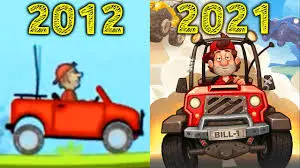
The original Hill Climb Racing launched in 2012 and became a global phenomenon almost overnight. Players control Newton Bill, an amateur hill climber with an insatiable appetite for fuel and a seemingly bottomless pit of determination. The gameplay is deceptively simple: drive as far as possible across procedurally generated terrain without flipping your vehicle or running out of fuel. You collect coins along the way, upgrade your vehicles and driver, and unlock new stages. There’s no multiplayer, no real-time competition — just you, your car, and the hill.
Hill Climb Racing 2 (HCR2)
The sequel arrived in 2016 and took a noticeably different direction. While the core physics-based driving remained intact, Hill Climb Racing 2 introduced a competitive multiplayer mode, a completely overhauled progression system, and a much deeper customization experience. It’s the same universe but with a far more social and competitive heartbeat.
Core Gameplay Differences
The most noticeable area where hill climb racing 1 vs 2 diverges is in how the core gameplay loop actually works.
Solo vs Multiplayer Focus
HCR1 is a purely single-player experience. Your goal is to beat your own distance record across a variety of stages — Moon, Arctic, Countryside, and more. There are no opponents, no leaderboards you race against in real time, and no seasons or events. It’s a meditative, almost zen-like experience.
HCR2 flips this entirely. The game revolves around cup races, where you compete against other real players’ ghost cars on short, curated tracks. You earn trophies, climb leagues, and participate in seasonal challenges. The competitive structure transforms the experience from a personal challenge into a social rivalry.
Track Design Philosophy
In HCR1, tracks are procedurally generated and essentially infinite. You drive until you run out of fuel or tumble off a hill. The randomness is part of the charm — every run feels slightly different.
In HCR2, tracks are hand-designed and finite. Each race has a clear start and finish line. This makes the game feel more like a traditional racing game and less like an endless runner. The trade-off is that you lose some of the unpredictability that made the original so addictive.
Fuel Mechanic
One of the most iconic elements of HCR1 is the fuel tank. Running out of fuel ends your run, and picking up fuel canisters scattered across the terrain is a constant priority. It adds a layer of urgency and strategy to every trip.
HCR2 removes this mechanic entirely. Races are short enough that fuel management isn’t necessary. While this streamlines the competitive experience, purists often miss the tension that the fuel system created.
Vehicle Variety and Customization
Both games feature a wide range of vehicles, but they handle customization very differently.
HCR1 Vehicles and Upgrades
In the original, you unlock vehicles by spending coins earned through gameplay. Each vehicle can be upgraded across a handful of categories — engine, suspension, tires, and fuel tank. The upgrades are straightforward and the progression feels linear. You pick a vehicle, grind coins, upgrade it, and move on. There’s a satisfying simplicity to it.
HCR2 Vehicles and Parts System
The sequel introduces a much more complex parts system. Instead of simple stat upgrades, you collect individual parts — engine parts, body parts, exhaust components — and combine them to improve your vehicle’s performance. Parts come in different rarities, from common to legendary, and finding the right combination for a given track becomes a mini-game in itself.
On top of that, HCR2 offers extensive cosmetic customization. You can change your car’s paint job, add custom decals, and even dress up your driver character. This level of personalization was completely absent from the original.
Monetization and In-App Purchases
This is a big area of difference, and it’s one that many players feel strongly about.
How HCR1 Handles Money
The original game is relatively light on its monetization strategy. You can watch ads to double your coin rewards, or spend real money on gem packs to speed up purchases. But it’s entirely possible to enjoy the full game without spending a single cent. The grind is manageable, and the gameplay doesn’t feel paywalled.
How HCR2 Handles Money
HCR2’s monetization is noticeably more aggressive, which is a common trade-off with games that feature competitive multiplayer. The parts system, chest mechanics, and event rewards can feel designed to encourage spending. High-rarity parts that give significant performance advantages can create a pay-to-win dynamic in competitive leagues, which frustrates many players. That said, skilled and patient players can still compete without spending real money, especially in lower leagues.
Graphics and Visual Style
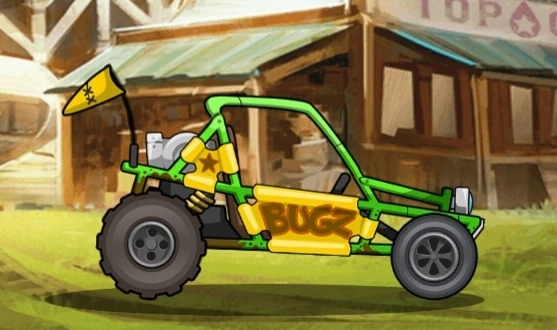
Visually, both games share the same cartoony aesthetic, but HCR2 is a clear step up in terms of graphical fidelity. The environments in the sequel are more detailed, the animations are smoother, and the UI has been overhauled to feel more modern. HCR1 still holds up well for what it is — a lightweight, charming mobile game — but it shows its age compared to the sequel.
Both games run smoothly on a wide range of devices, which is part of why they’ve both maintained such large player bases over the years.
Community and Longevity
HCR1 has a devoted fanbase that continues to play it years after launch, largely because of its simplicity and the nostalgic comfort it provides. It doesn’t demand much — you can pick it up for five minutes or five hours and get the same satisfying experience.
HCR2 has a more active and vocal community, driven by its competitive nature. Seasonal events, leaderboards, and team features mean there’s always something new happening. Fingersoft continues to update the sequel regularly, adding new tracks, vehicles, and events. For players who want a living, evolving game, HCR2 clearly wins.
Which Is Better? Our Verdict
The question of which is better ultimately depends on what you’re looking for in a mobile game. There is no objectively correct answer, but here’s a simple breakdown to help you decide:
- Choose HCR1 if: You want a relaxed, single-player experience with no competitive pressure, simple mechanics, and a game you can enjoy completely free.
- Choose HCR2 if: You thrive on competition, love deep customization systems, enjoy seasonal content and events, and want a game with an active multiplayer community.
- Download both if: You have the storage space. They scratch very different itches and there’s no reason you can’t enjoy both for different moods and occasions.
The differences between these two titles are significant enough that they almost feel like separate genres wearing the same costume. One is a solo endurance challenge; the other is a competitive racing platform. Knowing that distinction going in makes all the difference.
Frequently Asked Questions
Is Hill Climb Racing 2 just a reskin of the original?
Not at all. While both games share the same physics-based driving style and cartoony aesthetic, HCR2 introduces competitive multiplayer, a parts-based upgrade system, hand-designed tracks, cosmetic customization, and seasonal events. It’s a significantly expanded and reimagined experience rather than a simple visual update.
Can you play Hill Climb Racing 2 offline?
HCR2’s main multiplayer cup races require an internet connection since you’re competing against other players’ ghost data. However, some offline modes and features may be accessible without a connection. HCR1, by contrast, is fully playable offline at any time.
Is Hill Climb Racing 1 still worth playing in 2024?
Absolutely. HCR1 remains a fantastic mobile game for players who prefer a low-pressure, solo experience. Its simplicity is its greatest strength, and the core gameplay loop is just as satisfying today as it was when the game first launched. It also receives occasional updates from Fingersoft.
Which game has more vehicles?
HCR2 generally features a larger roster of vehicles and continues to grow with regular updates. HCR1 has a solid selection of vehicles as well, but the sequel’s ongoing development means it tends to have more variety at any given time.
Is Hill Climb Racing 2 pay-to-win?
This is a common concern among players. HCR2 does feature a parts system with different rarity tiers, and spending real money can accelerate progress. In higher competitive leagues, this can create an imbalance. However, skilled players who invest time rather than money can still perform well, especially in lower and mid-level leagues.
Disclaimer: This is an unofficial fan site and is not affiliated with, endorsed by, or connected to Fingersoft in any way. All game names and trademarks belong to their respective owners.